NRIs praise 'balanced' budget for country
Majority of taxpayers will pay lower income tax, but concerns remain
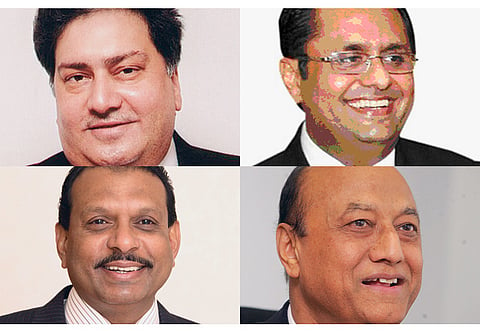
Abu Dhabi: The non-resident Indian (NRI) community in the UAE hailed India's budget for the next fiscal year as one which is balanced and progressive for the country as the federal government sought to shrink its budget deficit and announced increases in spending on roads, power and other infrastructure.
As well, the government's plan to introduce new slabs on personal income tax would benefit the vast majority of taxpayers who would now have to pay less income tax, the NRIs added.
However, they voiced their concern over the increase in excise duties in the budget on transportation fuels, which would make petrol and diesel costlier, effective today. They said the move to increase excise duty on the two fuels would exert greater inflationary pressures.
"As expected, the Finance Minister has once again focused on a few key areas: agriculture, infrastructure, rural development, health and education and housing for the poor. These are very crucial to India's development and certainly will pay dividends in the long run," said Yusuffali M.A., Managing Director of the Emke Group and Director of the Abu Dhabi Chamber of Commerce and Industry.
Buying power
"The revision in personal income tax rates will put more money in the pockets of the middle class, thereby increasing their buying power," he added.
Kamal Vachani, Director of the Almaya Group, said the new tax slabs "will put more money in the hands of consumers and enhance consumption."
"In direct taxes, the current surcharge has been reduced from 10 per cent to 7.5 per cent. This will reduce the tax burden on Indian companies," he added.
"I believe it was a balanced and pragmatic budget. Farm sector reforms and social spending increases will augur well for the vast majority of Indians in the agricultural and rural sector. However, petrol and diesel price increases were a surprise and this could have an impact on the overall cost," said Rizwan Sajan, Chairman of Danube Building Materials.
"Tax slab adjustments will effectively put more money in the hands of the common man to spend but food inflation needs to be contained," he added.
"This is a growth oriented and inclusive budget. One big negative development is the hike in excise duties on petrol and diesel. This can aggravate the already very high food prices and put further pressure on inflationary trends," said Paras Shahdadpuri, chairman of the Nikai Group of Companies and President of the Indian Business and Professional Council (IBPC).
"As expected, there was a moderate rollback of economic stimulus and withdrawal of subsidies in some sectors. However, the hike in fuel prices evoked extreme negative sentiments all over the country," said Abbas Ali Mirza, an IBPC board member.
He added: "The general feeling is that the Finance Minister has intelligently put money in the hands of the common man by providing income tax relief to 60 per cent of the taxpayers in India by broadening the tax slabs."
Raju Menon, Chairman and group managing partner of Morison Menon, said the plan to establish a Financial Stability Council is a very good move, given the current global economic downturn.
"This council may not be a regulator but it may monitor the overall health of corporate [bodies]," he said.
"Increasing allocation for farm credit will generate more job opportunities and increase income of farmers," said K.V. Shamsudheen, Chairman of the Pravasi Bandhu Welfare Trust.

