Europe unlikely to act soon on IMF seats
US is frustrated with continent's dominance over 24-member board and refusal to share power with emerging economies
Brussels: European Union finance ministers are unlikely to decide anytime soon to cut the number of European seats at the Executive Board of the International Monetary Fund, a move sought by the United States, EU sources said.
The United States, long frustrated at Europe's refusal to share more IMF power with emerging economies, took unprecedented action last month to block plans that would have maintained Europe's long-running dominance over the 24-member board.
Germany, France and Britain have their own seats on the board, while EU members Belgium, the Netherlands, Spain, Italy and Denmark represent groups of countries. Switzerland, although not part of the EU, also has a chair.
EU finance ministers will discuss the US move at their next meeting on Tuesday, but a senior euro zone source involved in the preparation of the meeting, asked what result could be expected, said: "Nothing. I expect that the single European chair will be identified as a very long-term possible solution," the official said.
"Nobody will give up their seat without a tremendous amount of pressure," the source said, but added that such pressure was starting to build.
The official said that in the end, smaller European countries were more likely to lose their seats than bigger countries.
"It is obvious what will happen. It is always the question of the weakest link. It is unlikely that it will be Germany that will lose its seat, so by backward induction you can figure out who the weakest link is and who the second weakest link is," the source said.
"So it is quite obvious what will happen, but the first European position is to say, ‘The number of seats that we have is fully deserved'," the source said.
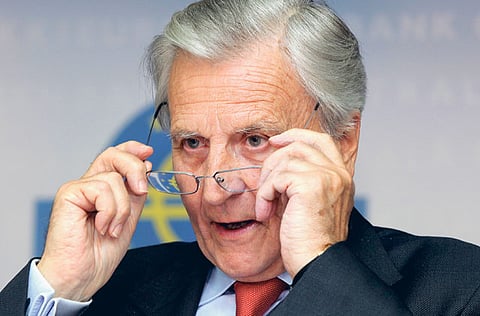
European Central Bank President Jean-Claude Trichet said on Thursday Europe needed to speak with a united voice to ensure it retains its influence in the IMF.
The current Europe-US domination of the Washington-based fund is a reflection of its post-Second World War setup but the order is now being challenged by the rise of China and emerging economy powerhouses.
The IMF board is one of the global lender's main decision-making bodies. It approved billions of dollars in emergency loans for countries hit by the global financial crisis and oversees the way the Fund is run.
Argentina is one of the developing countries that has pushed hard for IMF reform and greater participation of emerging-market heavyweights.
"The Europeans are the ones who will have to reduce their participation. Right now, I believe that Belgium and China pay the same quota at the IMF. Obviously, this cannot be!" said Nestor Stancanelli, part of Argentina's delegation in the Group of 20 Nations.

