Islamic Art: Timeless relics
An eighth-century Quran and a curtain from the tomb of the Prophet are among the priceless artworks on display at DIFC exhibition
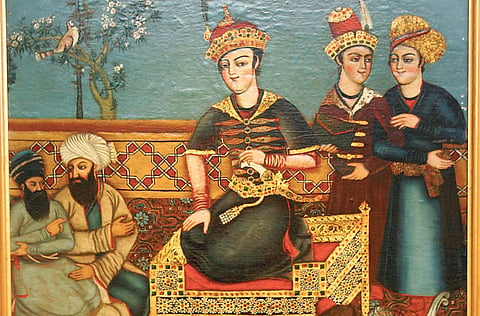
Dubai : A majestic Ottoman Empire period curtain from the tomb of the Prophet Mohammad (PBUH) and a pristine handcrafted glass vase dating back to the seventh century are among the artefacts on display as part of an exhibition of Islamic art during Ramadan.
The exhibition titled ‘Story of Islamic Art in 99 Objects', which is under way at DIFC (Dubai International Financial Centre) and will run throughout Ramadan, is a collaboration between the Farjam Collection and Zayed University. The exhibition offers a glimpse of artwork focused on faith and spirituality spanning many centuries and countries and works created under patronage for some of Islam's greatest civilisations and cultures.
It features Quran copies, manuscripts, calligraphy, textiles, ceramics, miniatures, metal works, jewellery and arms.
The art is all part of Iranian industrialist Farhad Farjam's private collection and the exhibits have been used at workshops on museum studies for students at Zayed University.
Emilie Faure, Collection and Exhibitions Manager at Farjam Collection, said: "The unique thing about Islamic art is that even items and objects that are supposed to be used every day are beautifully designed and crafted. It's not something you see much in Western art."
The theme of the display is to show how the Quran has influenced artists throughout the Muslim world.
"When artists were commissioned to do a piece of art, like calligraphy, their devotion to the task resulted in some truly magnificent works.
"The curtain from the Tomb of the Prophet was handmade by a group of artists who had to individually weave the calligraphy and the design of the arch and mosque lamp. It dates from 1808 to 1838 and yet it's still in exquisite condition which says a lot about the workmanship," she said.
Among the rare art objects is an intact Sasanian or early Islamic facet-cut vase from the 7th century, central Asia. The facets were "chipped" out of the body of the vase and were designed to improve the appearance by allowing it to reflect light.
A section from one of the earliest Quran copies, dating back to the 10th century from Mesopotamia, features early forms of calligraphy. It is written on horizontal pages of vellum mammal skin and bound from the shorter side. This style made it difficult for the full Quran to be bound in a single book so it was divided into sections that were bound separately.
Emilie said: "We had about 400 people for the opening, but I expect around 1,500 people visiting during Ramadan. The idea is to show Muslims and non-Muslims some of the beauty and skill used in Islamic art."
Where: Gate Village 4, DIFC
When: Until September 15
Time: 10am-8pm (Sunday to
Thursday) 12pm-8pm (Saturdays)
Entry: Free


