Chef Vineet Bhatia trawls Deira Old Spice Souq in Dubai
Celebrity chef shows us how to choose and use spices in cooking
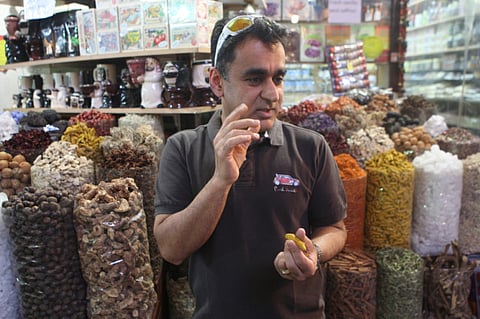
It wasn’t the first time I visited the Old Spice Souq in Deira but this particular trip also turned into a nostalgic journey. Having taken countless visitors to show them this ancient part of Dubai, the emanating smells always beckoned but when visiting with a Michelin-starred chef, you actually take interest in the spices.
It was a cool afternoon when Vineet Bhatia of Indego restaurant at the Grosvenor House took a stroll through the narrow lanes of the souq with The weekend tabloid! to pick some spices and cook a special lemon-prawn curry with spiced rice.
“I always find this place fascinating,” said Bhatia, picking a handful of dried rose buds and smelling them. “There’s so much of flavours and perfumes in this market. I can find a lot of things to use here.”
I remember eating my paternal grandmother’s potato and methi (fenugreek leaves) tempered with hing (asafoetida) and red chillies, and karela (bitter gourd) cooked with fennel seeds and onions. “Keep it simple,” she would say. “Don’t overdo the spices. One spice is enough to bring out the flavours of a particular vegetable”.
And here was a famous chef reiterating her.
“Don’t use too many spices together. Make an aromatic, flavourful blend of a few, else it will create a camouflage and spoil the dish,” said Bhatia.
Bhatia dipped into a sack at one shop, then another, yet another, crushing the wares, smelling them, tasting them.
“It’s very important that wherever you go, wherever you cook, you try and absorb the local culture and flavours around you. Arabic spices are very similar to what we use back in India but some of them are unusual. First thing that catches my eye is this” he said picking up a dried lime. “These have a very nice aroma and are used a lot with fish, lamb and can be a very nice flavour to incorporate into vegetables and rice. Slightly bitter but actually divine”.
Having lived in this country almost my entire life and cooking myself, it was quite clear much of the spices used back home are common to the cuisine here. From star anise to cumin and fennel, clove to pepper, red chilli to ginger, we’ve used them all at home and here. However, Bhatia clarifies that powdered and whole spices should not be cooked together.
“There are only four powdered spices we should use — red chilli, coriander, cumin and turmeric. Spices are used in different forms. When we cook, don’t cook the powdered spices and the whole spices together. Just use whole spices ground on their own.
“Also there are various stages of adding spice to food. Though whole spices add a lot more flavour, as you smell or taste them they don’t give much. It’s only when they are cooked in oil that they exude flavour. But remember that the oil has to be pre-heated or warm. Never too hot and never cold. The spices have oils and enzymes in them, if you cook in hot oil the infused flavour is off.
So the first stage is to add flavour into oil, which will flavour the dish. Second, add spice powders. These form the base or the masala, also called gravy or the sauce. And at the very end, add garam masala only for the aroma.”
Long forgotten memories of the family women sitting in the winter sun with their noses covered, pounding away in mortars and filling my grandparents’ courtyard with a myriad of aromas, came unbidden. However, spices today are easily available in all supermarkets all over the world. But Bhatia still prefers to use them whole and make his own blends fresh.
“The best way to buy spices is whole from the market, not the ones in jars or cans because they tend to be quite old. Also make sure you keep them in an airtight container because that’s the best way to keep them fresh, even when they are ground. If you leave them open for too long, they get oxidised and the flavours are lost. Even when shopping in the souq, don’t pick from the lot outside. Go inside, open a jar and take from there.
“It’s very important that when you cook, you cook with your senses,” said Bhatia. “It’s not just a visual experience but is also the aroma and the taste. Use [spices] sparingly, carefully and flavourfully, and you’ll be fine”.


